A Wildflower a Day, by Dr John Feltwell, published by Wildlife Matters. Publication October 2026. 200pp. ISBN 978-0-907970-05-7 Available from john@wildlifematters.com
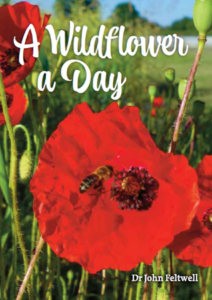
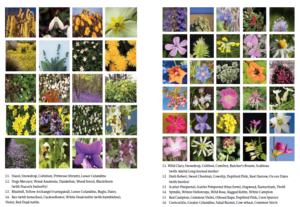
Over 200 colour photographs by the author
Biodiversity bursts from this new book, as it brings to life many of the familiar wildflowers that we see (or used to see) in waysides, woodlands, hedgerows and gardens: a plant for every day of the year, whether it is a wildflower, a tree or a fern. The various insects (such as bees and moths), birds and mammals which are co-evolved with our wildflowers are described. Mostly native species have been chosen, but now, in Britain there are more non-natives than natives, many from the Mediterranean. You will not find the invasive buddleia mentioned, but true British natives that still have a lot to offer foragers.
The Romans may have started this dribble of introduced species (with seeds in their sandals) but it has gathered a pace in more recent times. The book is for all those who just like wildflowers. There are a few botanical terms used, such as words for historic arrivals (archaeophytes) or more recent ones (neophytes) and definitions area provided. The maestro for bringing ordinary everyday wildflowers to everyone’s home was the Rev. Keeble Martin who used Common Names and Latin Names, as has been followed here, but strictly following best regarded botanical literature – namely from Dr. Clive Stace of the New Flora of the British Isles.
With botanical quotes from Vita Sackville-West and William Robinson, through to Christopher Lloyd, Rachel de Thame and Fergus Garrett the book resonates to the lost wildflowers of the countryside. Inspiration has, as always been taken from the Impressionists view of the hot, sun-kissed landscape depicted by Van Gogh through to the amazing Hockney. There has been a systematic slide to an impoverishment of the wildflowers through the loss of habitats and this is discussed in the long introduction as part of the all-too-familiar Anthropocene. Each wildflower that is experiencing a population decline is indicated with a red arrow facing downwards. Some are rare, protected and Red Listed.
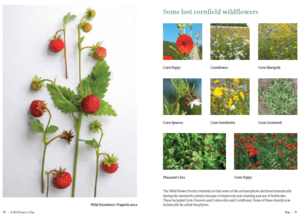
All the lost cornfield wildflowers have been included, once common, now gone in many cases. The many flowers known to Shakespeare are described, so too the strewing herbs laid out in Tudor houses to deter pests. There are Cottage Garden wild plants of herbaceous borders included, as well as plants from which to make snuff. Conservationists will be delighted that lots of the typical wildflowers that are ‘Ancient Woodland Indicators’ in Britain, are all listed with the notation: AWI.
So, biodiversity underlies the whole of the book, where wildflowers support a huge range of wildlife especially foragers.
The book has a Glossary, an Index of Common names and Latin names, References and Further Information. There are over 200 colour photographs, all from the author.
Published by Wildlife Matters 200pp £15 available from the author john@wildlifematters.com + pp.
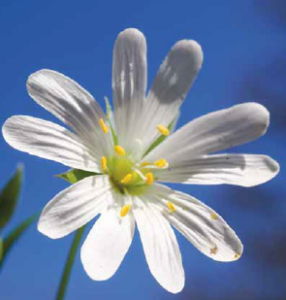
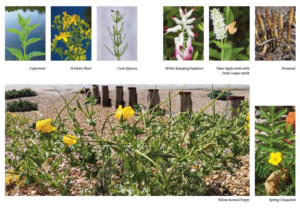
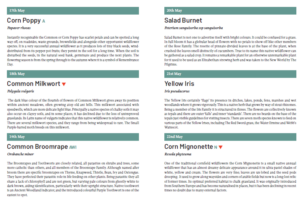
Typical entries
About the Author:
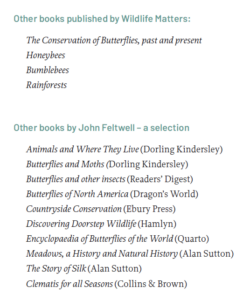
Dr. John Feltwell has many books published with well-known publishers and through his own publishing house: Wildlife Matters.
His expertise as a scientist cuts across many disciplines as he is a professional botanist, zoologist, and conservationist fascinated by environmental law
ends